


SEO for Auto Repair Shops
Local SEO for auto repair shops captures the urgent, high-intent searches that happen when a car breaks down and the driver needs help immediately.
Book a MeetingGet your free audit

SEO for Auto Repair Shops
Local SEO for auto repair shops captures the urgent, high-intent searches that happen when a car breaks down and the driver needs help immediately. By optimizing Google Business Profiles, building strong review profiles, and creating service-specific pages, independent auto repair shops consistently outrank chain competitors in the map pack where drivers make split-second decisions about who to call.
Auto Repair Searches Happen in Moments of Urgency
A dashboard warning light. A strange noise from the engine. A flat tire on the way to work. Auto repair searches are among the most urgent local queries on Google. Drivers searching for auto repair are not browsing options for next week. Drivers searching for auto repair need a shop now.
That urgency compresses the decision window to minutes. A driver with a check engine light will search “auto repair near me,” scan the map pack results, read a few reviews, and call the first shop that looks trustworthy. The entire process takes 60 to 90 seconds.
The shops that appear in the map pack during that 60-second window get the call. The shops that do not appear do not exist in that driver’s reality. Local SEO determines which shops are visible in that critical moment.
Auto Repair Has a Trust Problem. Local SEO Solves It.
The auto repair industry has a well-documented trust problem, and everyone in the industry knows it. Drivers fear being overcharged, upsold on unnecessary repairs, or taken advantage of because drivers do not understand what is wrong with their car.
Local SEO directly addresses the auto repair trust problem through three mechanisms:
Reviews build trust before the first phone call. A shop with 300 reviews and a 4.7-star rating communicates trustworthiness before a driver ever walks through the door. Reviews where customers describe honest pricing, clear communication, and quality work address the exact fears that make drivers hesitant. Review volume matters: a shop with 300 reviews at 4.7 stars will outrank and outconvert a shop with 30 reviews at 4.9 stars because the larger sample size signals reliability.
Photos show professionalism. A clean, well-organized shop bay photographed and uploaded to the GBP communicates professionalism. Photos of the team, the waiting area, the equipment, and the facility all help drivers form a positive impression before arriving. Most auto repair GBP profiles have fewer than 10 photos. A shop with 30 to 50 quality photos covering the facility, equipment, team, and completed work stands out immediately.
Transparent service information reduces anxiety. A website with dedicated pages for each service (oil change, brake repair, transmission service, tire rotation, diagnostics) that explains what the service involves, why the service matters, and what a customer can expect addresses the knowledge gap that fuels distrust. Drivers who feel informed feel less vulnerable.
Service-Specific Pages Capture Service-Specific Searches
“Auto repair near me” is the high-volume keyword, but drivers also search for specific services: “brake repair near me,” “oil change,” “transmission shop,” “check engine light diagnosis,” “tire alignment.”
A shop with one generic services page loses visibility for every service-specific search. A shop with dedicated pages for each major service captures search traffic across the full range of services the shop offers.
Each service page should:
- Target the specific service keyword (“brake repair,” not “our services”)
- Explain what the service involves in language a non-mechanic can understand
- Address common customer questions about that specific service (cost range, time required, signs the service is needed)
- Include relevant vehicle types if the shop specializes (European, domestic, diesel, hybrid)
- Use Service schema markup so search engines can parse the service type
The most effective auto repair websites structure service pages by category:
- Maintenance: Oil change, tire rotation, fluid flushes, filter replacement, tune-ups
- Repair: Brake repair, suspension, steering, exhaust, electrical diagnostics, engine repair
- Tires: Tire sales, alignment, balancing, flat repair, seasonal changeover
- Diagnostics: Check engine light, warning light diagnosis, pre-purchase inspections
- Specialty: European vehicles, diesel, hybrid/electric, performance, classic cars
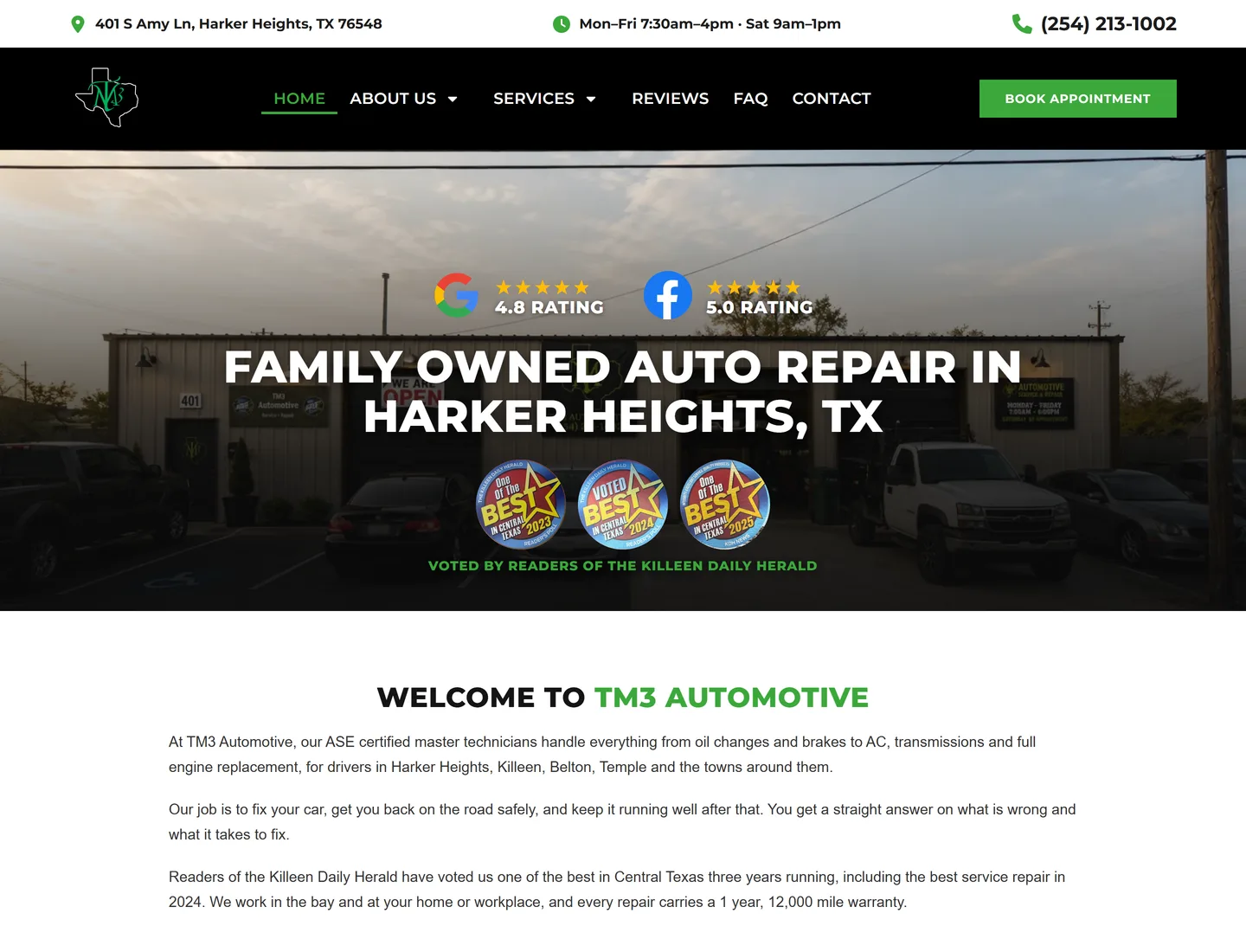
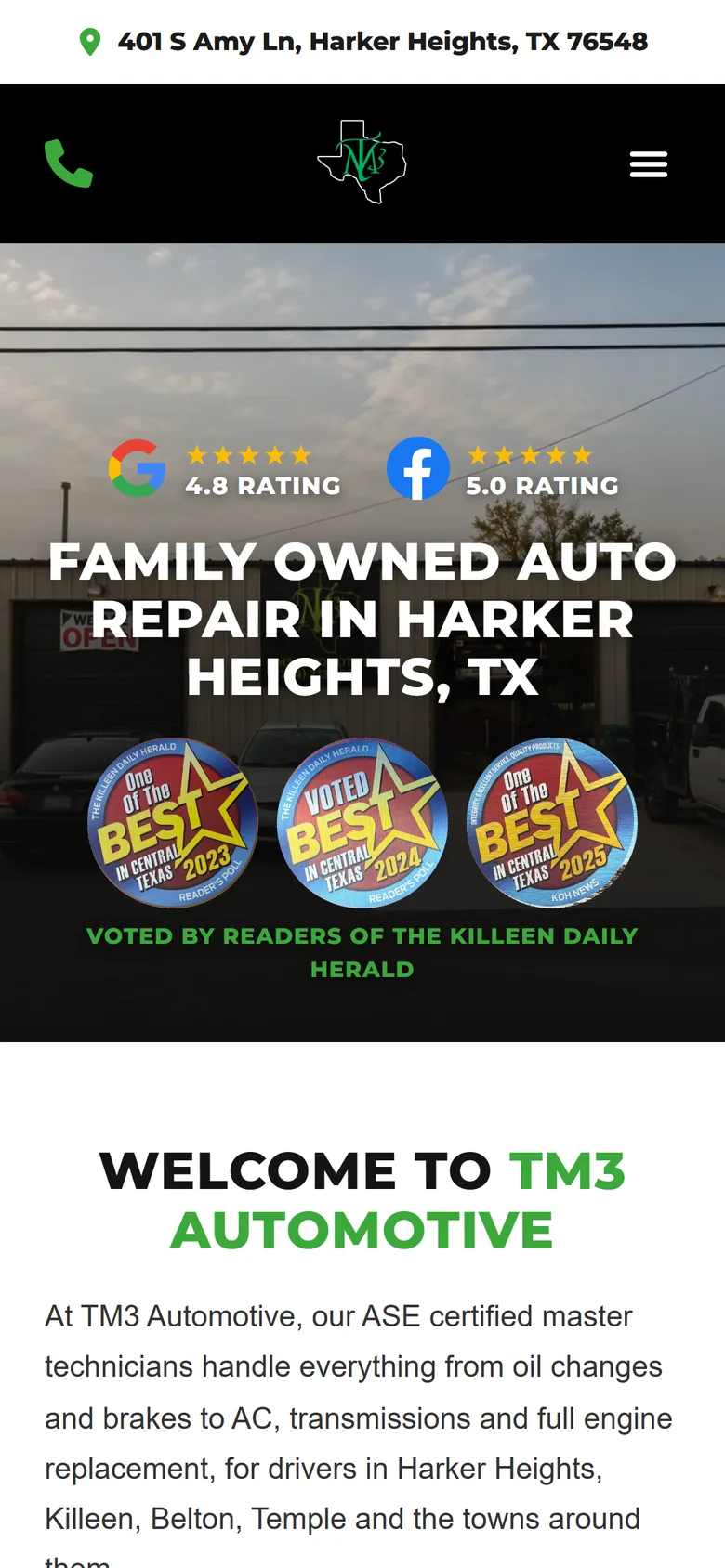
We built exactly this structure for an auto repair and fleet shop in Harker Heights, Texas. Their whole business had been running off a single page, and the rebuild gave them a services page, a first service page for AC repair, and a service area page for the next town over.
Competing Against Chain Shops and Dealerships
Independent auto repair shops compete against two categories of well-funded competitors: national chains (Midas, Firestone, Pep Boys, Jiffy Lube) and dealership service departments.
Both have advantages in marketing budget and brand recognition. Neither has an advantage in local SEO.
Chain shops have weak local signals. National chains manage hundreds or thousands of GBP listings from centralized corporate teams. The result is generic profiles with corporate stock photos, template descriptions, and minimal local engagement. Individual location managers rarely post updates, respond to reviews promptly, or maintain location-specific content. An independent shop that actively manages its GBP with real photos, timely review responses, and regular posts builds stronger local signals than a chain location running on autopilot.
Dealership service departments target different keywords. Dealerships rank for brand-specific service searches (“Honda oil change,” “Toyota brake service”). Independent shops compete for brand-agnostic service searches (“oil change near me,” “brake repair”) where the driver’s priority is convenience, price, and trust rather than brand loyalty. Brand-agnostic searches represent the majority of auto repair search volume.
Relationship-based reviews compound over time. An independent shop where the owner knows regular customers by name generates authentic, detailed reviews that chains cannot replicate. Reviews that mention specific mechanics by name, describe the personal attention received, and reference years of loyal service build a review profile that no corporate operation can manufacture.
GBP Optimization for Auto Repair Is Not Generic
Auto repair GBP optimization requires industry-specific knowledge:
Categories matter. The primary category should be “Auto Repair Shop” for general shops. Additional categories should reflect actual services: “Brake Shop,” “Transmission Shop,” “Oil Change Service,” “Tire Shop,” “Auto Electrical Service.” Incorrect or missing categories suppress visibility for service-specific searches.
Service descriptions should be detailed. Instead of listing “Brakes” as a service, the GBP should describe what the shop actually does: “Complete brake system inspection, brake pad and rotor replacement, brake fluid flush, and brake line repair for all domestic and import vehicles.” Detailed service descriptions help Google match the shop to specific search queries.
Attributes signal trust. Google offers attributes specific to auto repair: “Offers oil change,” “Has restroom,” “Has waiting area,” “Provides free estimates.” Every applicable attribute should be selected.
Posts keep the profile active. Weekly GBP posts featuring completed repairs (with customer permission), seasonal service reminders, or special offers signal to Google that the business is active and engaged. Shops that post regularly consistently outrank shops with dormant profiles.
What to Look for in an Auto Repair SEO Partner
Auto repair SEO has specific requirements that generic local SEO providers miss:
- Urgency-focused strategy that prioritizes map pack visibility for emergency and immediate-need searches
- Service-specific page architecture covering the full range of repair, maintenance, and specialty services
- Review strategy designed to overcome the auto repair trust gap with volume and detail
- Photo strategy that showcases the facility, team, and work quality to build trust before the first visit
- Citation management across Google, Yelp, RepairPal, CarFax, AAA, and other automotive directories
- Competitive analysis against both local independents and chain/dealership competitors
Our full local SEO service breakdown covers the complete methodology we apply across all industries.
Frequently Asked Questions
How quickly can an auto repair shop see results from local SEO?
How many Google reviews does an auto repair shop need to be competitive?
Can a small independent shop compete with chains through SEO?
How do AI Overviews affect auto repair searches?
Should an auto repair shop invest in SEO and Google Ads at the same time?
Do I need a website or is Google Business Profile enough?
Win the Map Pack When Drivers Need a Shop Now
We'll run a free audit of your Google Business Profile, reviews, and service pages, then show you exactly where you're losing visibility to chains and dealerships and how to outrank them.
Book a MeetingPrefer to talk? Call (859) 905-9573.
Get your free audit